
If you have a chest port and use numbing cream, you’ve almost certainly been told to cover it with plastic wrap. The instructions sound simple enough: apply a blob of lidocaine cream over your port, tear off a piece of plastic wrap, press it over the cream, and wait 30 to 60 minutes for the numbing to take effect. Nurses recommend it. Doctors suggest it. It’s the standard advice across infusion centers nationwide.
The problem is that “standard” doesn’t mean “effective.”
Plastic wrap was designed to cover leftovers in the fridge, not to adhere to human skin. It doesn’t stick. It doesn’t seal. And it has no mechanism for keeping numbing cream contained over a specific area of the body during movement.
Every port patient who has tried the plastic wrap method knows what goes wrong. The edges lift. The cream leaks out. Your seatbelt presses against it during the drive. Your bra strap drags it to the side. By the time you arrive at the infusion center, the cream has migrated off your port, soaked into your shirt, or simply dried out because the seal failed. You’re left with a mess on your clothing and a port that isn’t numb.
For patients who are already anxious about the needle, discovering that their numbing method has failed is deeply frustrating. Some patients eventually stop using numbing cream altogether because the preparation process feels like more trouble than it’s worth. That’s not a solution—it’s a surrender.
Port Protect was designed from the ground up by a patient who lived through every one of these failures. It’s a patented, medical-grade adhesive device that sticks securely to the skin around your chest port, creating a sealed reservoir for numbing cream. You apply the cream into the device, close the lid, and the cream stays in direct contact with the skin over your port. No leaking. No shifting. No mess.
The adhesive is hypoallergenic and made with a foam-like material that’s gentle on sensitive skin—a critical feature for patients undergoing chemotherapy or other treatments that make skin more reactive. The device is manufactured in a certified clean room to ensure the highest standards of cleanliness.
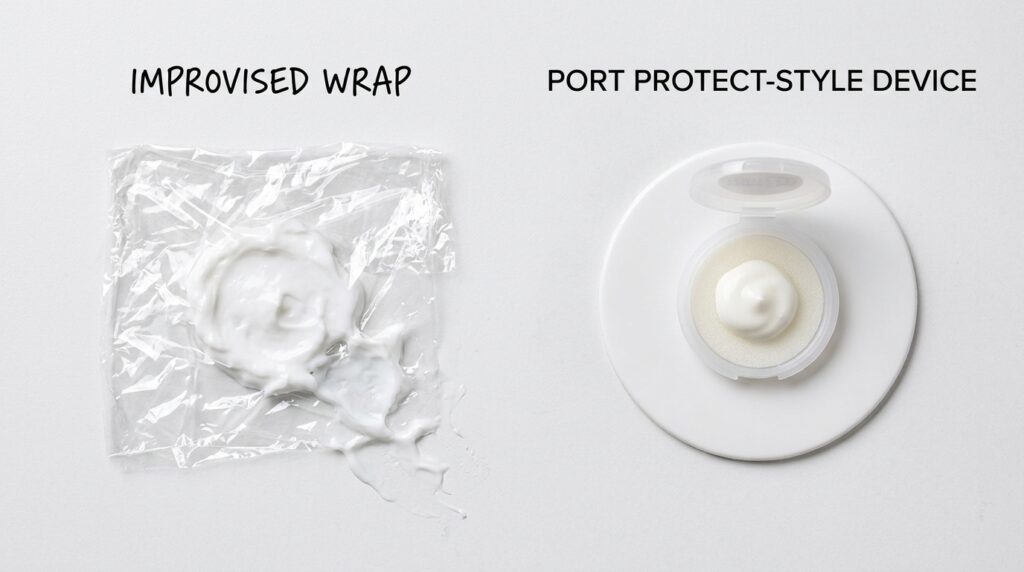
Patients who switch from plastic wrap to Port Protect consistently describe the same experience: for the first time, their numbing cream actually worked the way it was supposed to. They arrive at the infusion center with the cream still in place, the port site properly numb, and no mess on their clothing. Nurses notice the difference too—a clean, numb port site means faster, less stressful access for everyone.
One patient described Port Protect as the first time she was “actually numb enough to not feel the needle going into my port.” Another said it eliminated “a lot of my anxiety about the painful part of accessing my port.” These aren’t marketing claims—they’re real experiences from real patients.
Port Protect is available in adult (3.5”) and children’s (2.7”) sizes, sold in 5-packs ($24.95) and 10-packs ($47.90) at port-protect.com. If you’ve been fighting with plastic wrap, you don’t have to keep fighting. There’s a better way.